
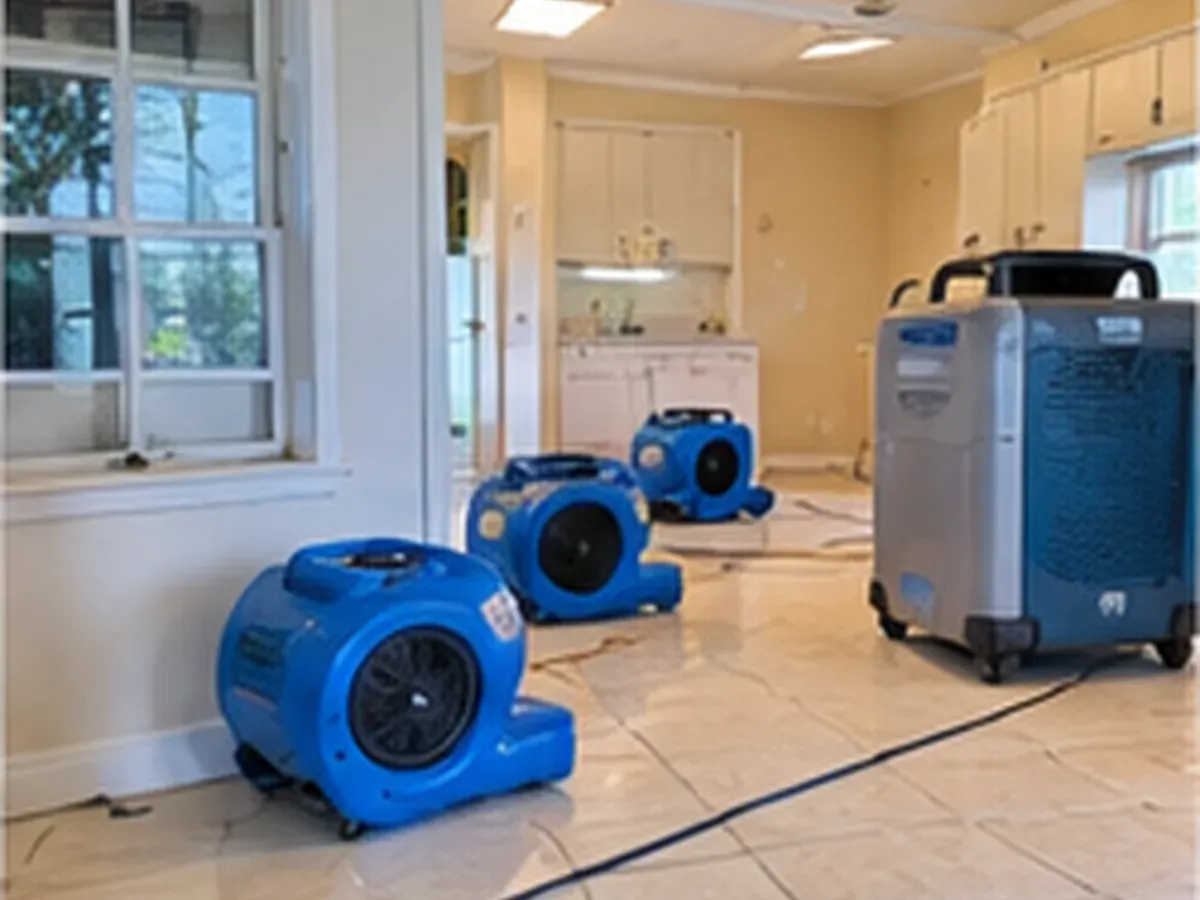
By the third night, the fans are loud and the floor feels dry. It is reasonable to ask why the machines are still there. The useful answer should name the remaining wet materials and show their progress, rather than merely saying the job needs another day.
What matters most
- The retained materials determine the drying review, not a preset number of nights.
- Air movers support evaporation; dehumidifiers remove water vapor from the air.
- A slow area needs an explanation and, where necessary, an adjustment.
Surface appearance is only one observation
Water can remain beneath flooring or behind a finished wall after the exposed surface improves. Different materials also release moisture at different rates. A thin finish and a substantial wood assembly cannot be judged by the same hand check.
Ask which retained materials are being monitored and where those locations are recorded. The answer should connect to the affected rooms, not an unlabelled collection of numbers that cannot be explained later.
The environment and access affect the plan
Air movement supports evaporation while dehumidification manages moisture released into the air. Enclosed cavities and layered floors may need additional access. The setup should be designed around those conditions rather than the number of fans that can fit in the room.
Opening windows, moving equipment or turning it off can change the environment being monitored. If noise or heat is difficult to manage, ask for a review. Quietly interrupting the setup can make later readings harder to interpret.
What a drying update should tell you
| Condition or decision | What it means | What to check next |
|---|---|---|
| The surface feels dry | The exposed face has improved. | Confirm the condition of flooring layers or cavities that remain enclosed. |
| One area is not responding | Access, material thickness or continuing entry may be affecting progress. | Ask what has been investigated and whether the setup needs changing. |
| Equipment is being removed | The drying footprint may be reduced or completed. | Request the findings for retained materials and the remaining repair list. |
A slow area deserves a reasoned adjustment
If one section is not responding, ask whether the issue is continued entry, material thickness or restricted access. Leaving the same equipment indefinitely is not an adequate explanation on its own. The next action should follow the suspected reason for the remaining moisture.
New findings can require a scope change. Those findings and the proposed response should be documented so that the homeowner understands why the work or cost is changing.
The structural drying guide explains how materials, air conditions and access shape the setup. For lower-level assemblies, flooded basement cleanup shows why carpet, walls and stored contents may need different decisions.
The end point should be explainable
At equipment removal, ask for the completion findings and a list of remaining repairs. The room being usable and the room being fully rebuilt can be different milestones. Keep that distinction clear before scheduling replacement finishes.
The drying record supports later repair and claim discussions. It does not promise that a future leak cannot happen. Source correction remains part of the overall recovery, alongside the completed material drying.
Understand the three parts of a monitoring visit
Material readings answer where moisture remains. Air-condition measurements help explain the drying environment. Equipment checks confirm that the intended setup is operating. Those observations belong together: a machine can run normally while an enclosed material remains hard to reach, and a dry-looking surface can sit above a wetter layer.
Ask how readings are tied to specific rooms and assemblies. The same material and location should be understandable across visits so progress can be compared. A thermal image may guide an inspection, but the pattern needs interpretation and confirmation. The record should identify what was actually measured rather than treating a colored image as a complete moisture map.
At the end of drying, review what will be enclosed by repair work. Which floors, wall bases and cavities were retained? Is the source controlled? Does another trade still need access? These questions connect equipment removal to the next construction stage. Keep the completion record with the repair scope, especially where the contractor rebuilding the room did not attend the monitoring visits.
Mistakes to avoid
- Turning machines off overnight without discussing the effect on the plan.
- Using a hand check as the only test of a layered floor.
- Accepting repeated extra days without an explanation of the remaining wet area.
From the first sign to the repair
- 1Identify the retained materials and monitoring locations.
- 2Compare progress with the earlier condition record.
- 3Explain any slow area and revise access if needed.
- 4Document completion separately from the remaining repairs.
Questions homeowners ask
Can fewer machines mean the job is nearly done?+
An equipment change can reflect progress, a revised footprint or a different approach to remaining materials. Ask what the change means in the context of the readings. The machine count alone cannot explain the condition of an enclosed layer. A brief update should identify which areas have improved, which remain part of the work and what the next review will address.
What should I receive when equipment is collected?+
Ask for the agreed completion findings and an explanation of materials retained or removed. Keep the source-repair information and remaining reconstruction scope with that record. The handover should be useful to someone who did not attend every monitoring visit. A room photograph can support it, but it does not replace the history of the affected materials and the decisions made during drying.
Cleanup services for this type of damage
Structural Drying & Dehumidification
A measured drying plan for framing, walls, floors and enclosed spaces.
Discuss this service ↓
Flooded Basement Cleanup
Water removal and structural drying for finished and unfinished lower levels.
Discuss this service ↓Need help with water damage in Buford?
Call with the source, the rooms affected and whether water is still entering. We can discuss the cleanup, drying and repair work needed.
Call (678) 329-9101