
A patch of mold on a basement wall is a surface clue. The more important question is why that wall stayed damp and whether the affected material continues behind the finish. Painting over it or applying a spray can change the appearance without resolving either issue.
A mold removal plan for a Buford home describes the moisture source, the work boundary and how affected material will be handled. It should also explain what has to be dried or repaired before the room is closed back up. The goal is physical cleanup and moisture control, with clear limits on what the work includes.
Related Water Damage Services in Buford
A single loss can need more than one type of work. Choose a card to jump to the phone section and discuss these services for your property.
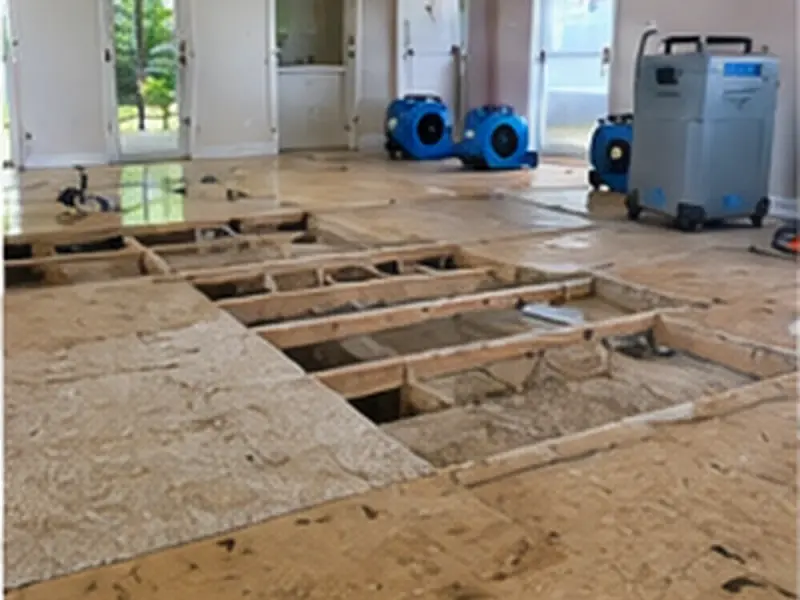
Crawlspace Water Removal & Drying
Check the floor system as well as the water beneath it.
Discuss this service ↓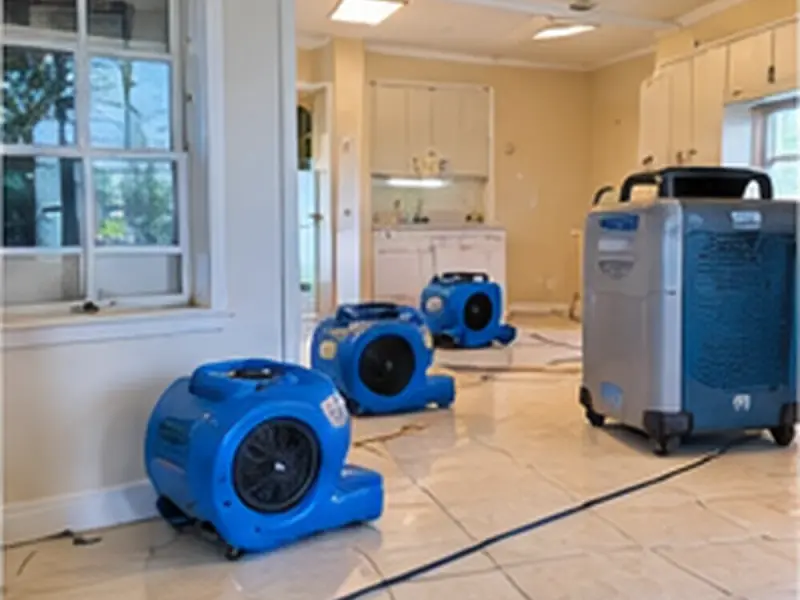
Structural Drying & Dehumidification
A measured drying plan for framing, walls, floors and enclosed spaces.
Discuss this service ↓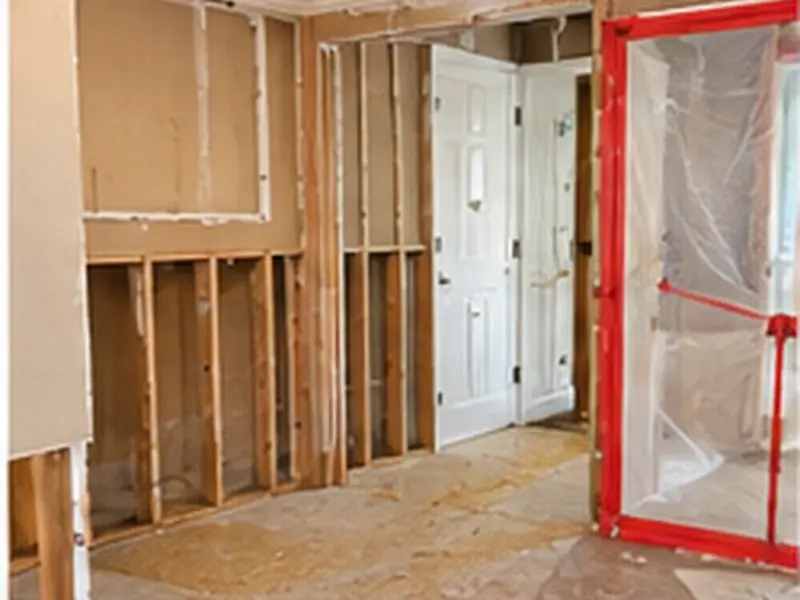
Water Damage Repair & Rebuild
Rebuild around a corrected source and documented dry materials.
Discuss this service ↓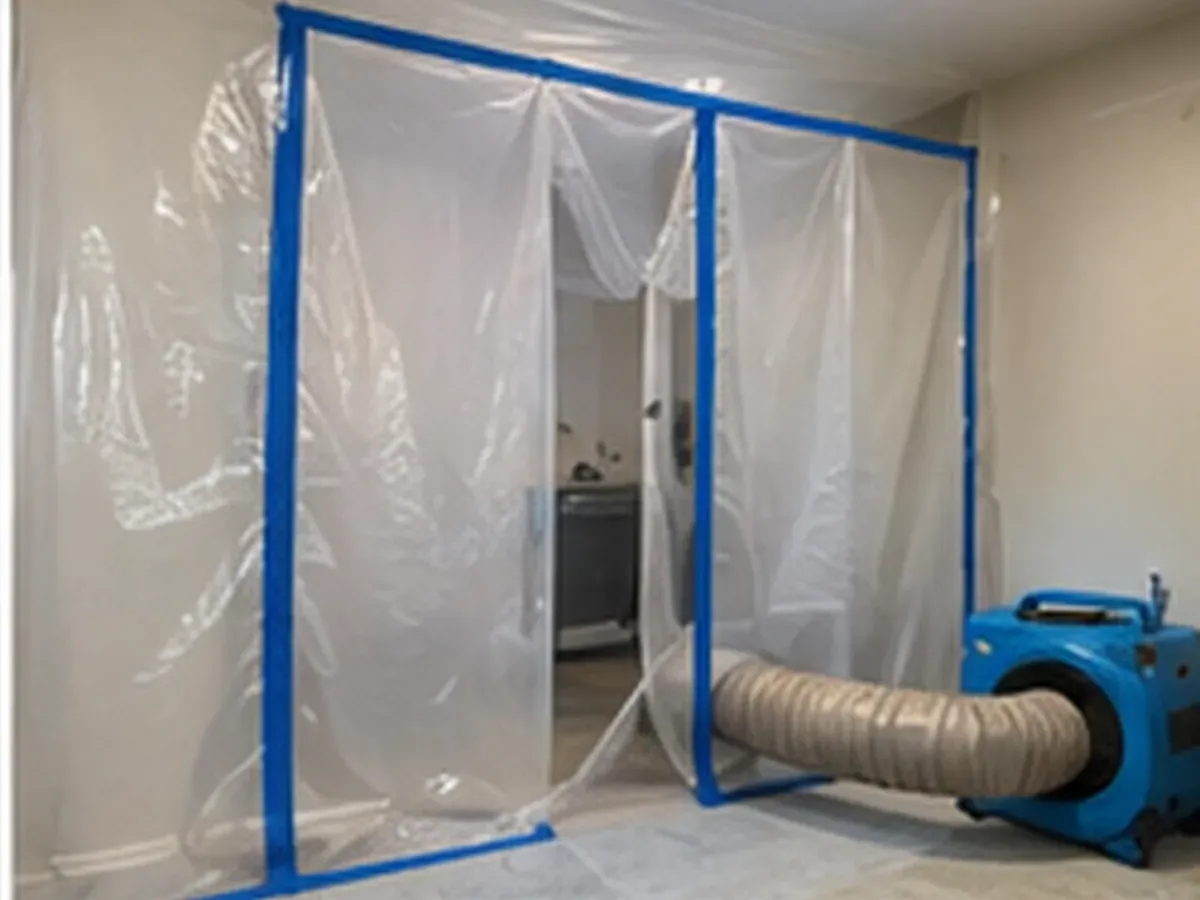
Finding the Moisture Behind Mold in Buford Homes
Recurring staining along a basement wall may relate to seepage, plumbing or indoor humidity. Those causes require different corrections. An inspection should look at the pattern, nearby building materials and any history of leaks. A reading taken on one exposed surface does not explain the whole wall cavity.
Describe when you first noticed the problem and whether it changes after rain or when the air conditioning runs. Mention recent leaks, stored items against the wall and any past coating or cleaning. That history helps the assessor decide where further checks are appropriate without assuming every dark mark is the same problem.
Containment and HEPA filtration have specific roles
Work that disturbs affected material can spread dust and debris. Containment establishes a boundary around the work area, while controlled air filtration can help manage airborne particles during the process. The arrangement depends on the extent and location of the work, not simply the presence of one plastic sheet.
HEPA equipment supports a controlled removal process; it does not replace removing damaged materials or correcting moisture. Ask how access to the room will be managed, how debris will leave the house and whether nearby heating or cooling openings need protection. Those practical details matter in a basement connected to occupied rooms.
Mold Removal: the key decisions
- 1Identify the source of persistent dampness.
- 2Define containment and a controlled debris route.
- 3Remove or clean affected materials as appropriate.
- 4Correct moisture and review remaining materials before repair.
Removing Affected Materials in a Buford Property
Some hard surfaces may be cleaned using a suitable method. Porous materials can be more difficult to clean thoroughly and may need removal depending on their condition. Drywall, insulation and carpet cannot be treated as though they were sealed tile. The proposed scope should distinguish materials to clean from materials to discard.
A spray-only proposal deserves further questions. What is being physically removed? How will residual dust be cleaned? Where is the moisture coming from? A coating or deodorizer cannot establish that a wet assembly is dry. Fixing water problems belongs in the cleanup plan.
Drying belongs in the removal plan
An opened wall may reveal damp framing or insulation beyond the visible patch. That finding can change the drying area and the repair scope. Ask how those changes will be documented and approved. Where a plumbing or drainage repair is outside the cleanup scope, identify the person responsible for completing it.
The room should not be rebuilt around unresolved moisture. Drying observations, the condition of remaining materials and any agreed verification steps should be reviewed before replacement finishes are installed. If independent assessment is needed, decide who arranges it and what questions it is intended to answer.
Before Your Buford Room Returns to Use
Occupants should understand where work is happening and which areas are restricted. People with health concerns should discuss their circumstances with a qualified health professional rather than relying on a contractor to give medical advice. A restoration scope can describe the building work; it cannot promise a particular health outcome.
Keep the initial photos, the agreed scope, source repairs and final documentation together. If staining returns, those records help distinguish a new event from an unresolved cause. Insurance treatment varies with the policy and circumstances, so ask the insurer about coverage without assuming that all mold-related work is included.
How Much Does Mold Removal Cost in Buford, GA?
For planning, professional mold removal may be estimated at roughly $10–$25 per square foot of affected area. The inspection must establish what needs treatment: the size of the room alone does not tell you how much wall, ceiling or framing is affected.
| Affected treatment area | Estimated budget | Scope to confirm |
|---|---|---|
| 100 sq. ft. | $1,000–$2,500 | A defined area with accessible affected materials |
| 200 sq. ft. | $2,000–$5,000 | More extensive material removal and cleaning |
| 400 sq. ft. | $4,000–$10,000 | A larger or more involved remediation area |
What goes into a mold removal estimate?
- Work-area setup and containment: Separating the affected area, protecting nearby rooms and arranging a controlled debris route.
- HEPA air filtration and cleaning: Managing particles during the work and cleaning the retained surfaces using an appropriate method.
- Affected material removal: Removing and disposing of porous or damaged materials that are unsuitable to retain.
- Moisture checks and drying: Checking remaining materials and addressing retained moisture before replacement finishes go back.
Factors that change the price in Buford
- Extent behind the finish: Growth or damage inside a wall can make the affected area larger than the visible patch.
- Material and condition: Cleanable hard surfaces require a different approach from affected drywall, insulation, carpet or deteriorated wood.
- Access and isolation: A tight crawlspace, attic or occupied room can make setup, removal and cleanup more involved.
- Source repairs and verification: Plumbing or drainage corrections, independent assessment when agreed, and specialist HVAC work may have separate costs.
The table applies the planning range to the affected treatment area, not the entire home floor area. Minimum setup charges can affect small jobs. Source repairs, structural replacement, new drywall, painting and specialist systems work are not included unless the written scope says otherwise.
Estimates only, not a quote or a measured Buford average. Actual pricing depends on inspection findings and the agreed scope. The listed stages are parts of the total estimate, not extra charges to add to the table.
Call (678) 329-9101 for an estimateMold Removal Questions in Buford, GA
Will spraying alone solve the problem?+
A product does not substitute for physical cleanup and correcting the water problem. Ask what the removal and moisture-control work actually includes.
Does every stained wall need complete demolition?+
No. The scope depends on the affected materials, access and findings. Targeted investigation helps establish the appropriate boundary.
Can I paint the room as soon as removal is finished?+
Repair should follow the agreed drying and verification steps. Painting does not resolve moisture inside the assembly.
Further reading: EPA guidance on mold and water damage cleanup ↗
For nearby coverage, see the service area guide. The photo gallery shows the building conditions, equipment and work stages discussed on this page.
Mold Removal in Buford: Discuss Your Cleanup
Call with the property location, the rooms affected and whether water is still entering. We can discuss the work and the next step.
Call (678) 329-9101